I treated my feet for years. Turns out my knees were the real complaint.
After a decade writing about foot health, I finally tried the one fix I'd always told readers to take seriously: real arch support. Six weeks with ForestStep insoles changed more than my heels.

May 23, 2026
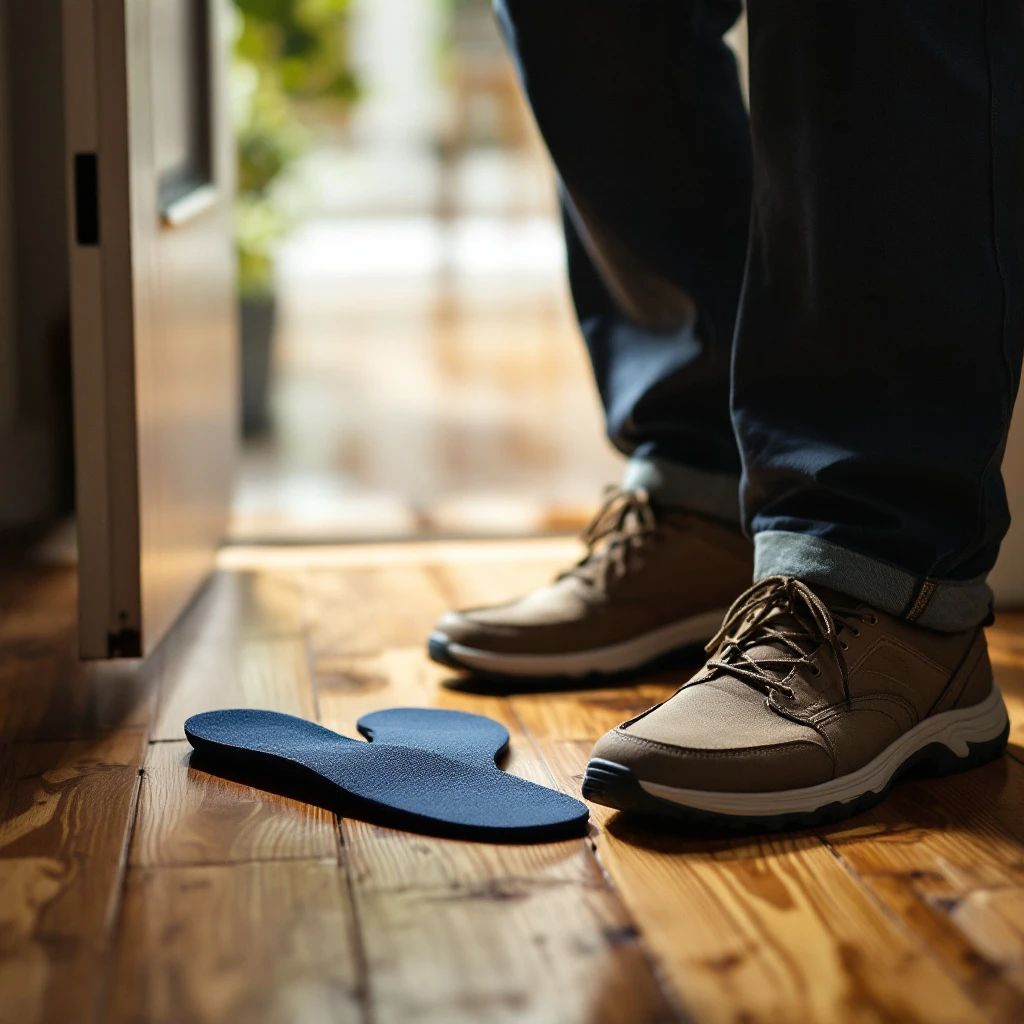
For about as long as I can remember, the first thing I did every morning was wince. That sharp, bruised feeling under the heel the moment my foot hit the floor — if you've had plantar fasciitis, you know the one. I'm 63, I spent twenty-two years coordinating an orthopedic clinic, and I still spent the better part of a decade managing my own feet the lazy way: a gel pad here, a softer shoe there, a lot of stretching I didn't keep up with.
What I didn't connect, embarrassingly, was the rest of it. The left knee that ached after a grocery run. The lower back that tightened up by dinner if I'd been on my feet. I'd filed those under "getting older" and moved on. It took a conversation with a podiatrist friend — and then six weeks testing a pair of ForestStep insoles — to see how stubbornly connected the whole thing was.
The part nobody told me about my arches
Here's the thing my friend said that stuck with me. When the arch flattens — and most of ours do, slowly, with age and miles — the foot rolls a little inward on every step. That tiny roll doesn't politely stay in the foot. It rotates the shin, which torques the inside of the knee, which tips the pelvis just enough to make the lower back work overtime. Thousands of steps a day, year after year.
In other words, the heel pain I'd been chasing and the knee and back aches I'd been ignoring weren't three problems. They were one problem, starting at the bottom. Treat the foundation, she said, and you give everything above it a chance to settle.
Your feet are the base of a chain. When the arch loses support, the misalignment travels upward — ankle, knee, hip, back. Restoring arch support can take the "twist" out of the leg, which is why some people notice their knees or back ease up once their feet are properly supported.
I'll be honest: I was skeptical that a drop-in insole could do what I'd seen custom orthotics do in the clinic. Those were molded to the patient and ran several hundred dollars. ForestStep is an over-the-counter insole that costs a small fraction of that. My expectations were low.
What showed up in the box
The first thing I noticed unboxing them was that they're not soft little cushions. They have a structured arch shell that holds its shape when you press on it, a genuinely deep heel cup that wraps around the back of the heel, and a cushioned top layer over the firm base. That combination — firm where you need support, soft where you need padding — is exactly what I'd hand patients leaflets about.
Fitting them was easier than I expected. There are cut lines printed on the bottom for each shoe size. You find yours, trim the toe with scissors, and drop them in. I'm a women's 8, and I cut a hair conservatively the first time, checked the fit in my shoe, then trimmed again. Took me maybe two minutes per insole. They went into my walking shoes first.

A quick note on first impressions, because I think it matters: the arch felt high to me for the first two or three days. Not painful, but present — the way a chair feels different when you finally sit up straight. If you've never worn real arch support, expect that. It faded as my feet adjusted, and I'd tell anyone tempted to give up on day one to give it a proper week.
Curious what they cost?
ForestStep sells in bundles — two pairs for $39, four for $59 — with free shipping and a 60-night guarantee.
See current pricing on the official site →Six weeks later: what actually changed
The morning heel pain went first. By the end of week one, that bruised first-step feeling had dropped from a daily 7-out-of-10 to maybe a 3, and by week three I had mornings where I genuinely didn't think about it. That alone would have made them worth the price for me.
The surprise was the knee. Around week three I caught myself finishing my usual two-mile loop without the familiar grumble on the inside of my left knee. I didn't trust it at first — I assumed I'd just had a good day. But it kept happening. By week five, the evening lower-back tightness I'd written off as "my age" was noticeably looser on days I wore them all day, and worse on the one weekend I switched back to my old shoes without them.
“The heel pain is what sold me. The knee and back relief is what made me order a second set for my other shoes.”
I want to be measured here, because overpromising helps no one. These are not a cure. They didn't make me 35 again, and they won't fix pain that comes from something other than your feet. If your knee or back trouble has a different root cause, an insole isn't your answer, and you should see your doctor. But for pain that genuinely starts at the feet — the kind so many of us over 55 are walking around with — restoring the arch did more, and reached higher up my body, than I expected.
Who I'd actually recommend these to
If you have plantar fasciitis or nagging heel and arch pain, these are an easy yes — that's their home turf. If you've got achy knees or a tired lower back and you've never properly addressed your feet, I think they're worth trying before you assume it's just wear and tear. And if you're on hard floors all day — nurses, teachers, retail, anyone whose job is standing — the cushioning alone earns its keep.
Two honest caveats. They add a little bulk, so in slim dress shoes they can feel snug; I keep mine in roomier everyday shoes and that's a non-issue. And give them the full week. The people I've seen disappointed are almost always the ones who quit during the adjustment days.
The bottom line
I spent years treating the symptom at the bottom and ignoring the complaints up top. ForestStep was the first thing that made me feel the connection — treat the foundation, and the building above it stops straining. At two pairs for $39, with a couple of months to decide, the math made it an easy thing to try. For me, it earned a permanent spot in my shoes. You can check availability and pricing on the official ForestStep site if you want to see for yourself.
Ready to give your feet the foundation back?
Free U.S. shipping. 60 nights to decide. Send them back if they don't earn their place.
Check stock at ForestStep →